

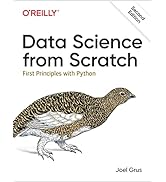
Data Science from Scratch: First Principles with Python
Product ID: 249677387
🐍Python 3.6 updated code
📊Core math & stats focus
📘500 pages of deep dive
469035 ₮
1
Sold byAmazon MongoliaDelivered byDesertcartCustomer service byDesertcartReturns14 days · 30 with PRO
Buyer Protection · Full refund if your order doesn't arrive as described.
Desertcart purchases this item on your behalf and handles shipping, customs, and support to Mongolia.
Secure transaction
Description
🚀 Code the future: Learn data science from the ground up!
- PYTHON 3 6 READY CODE - Stay current with up-to-date, hands-on Python examples.
- BRIDGE MATH PROGRAMMING - Perfect for millennials craving both analytical rigor and coding fluency.
- COMPREHENSIVE 500 PAGE GUIDE - In-depth coverage from linear algebra to deep learning.
- REAL WORLD ALGORITHMS EXPLAINED - Understand k-NN, Naïve Bayes, neural nets & more by coding them yourself.
- MASTER DATA SCIENCE FUNDAMENTALS - Build your skills from first principles, not just library imports.
Data Science from Scratch: First Principles with Python is a 500-page paperback by Joel Grus, updated for Python 3.6, that teaches data science by implementing algorithms from scratch. It covers essential math, statistics, machine learning models, and practical coding skills, making it ideal for aspiring data scientists who want a deep understanding beyond library usage.





Specifications
| Best Sellers Rank | #5,328 in Books ( See Top 100 in Books ) #2 in Programming Algorithms #5 in Web Programming #5 in Databases & Big Data |
| Customer reviews | 4.5 4.5 out of 5 stars (665) |
| Dimensions | 17.53 x 2.29 x 23.11 cm |
| Edition | 2nd |
| ISBN-10 | 1492041130 |
| ISBN-13 | 978-1492041139 |
| Item weight | 712 g |
| Language | English |
| Print length | 403 pages |
| Publication date | 30 April 2019 |
| Publisher | O′Reilly |
Common Questions
Yes, all products are sourced directly from authorized retailers in the US, UK, UAE and India. We maintain strict quality control processes and verify each product before shipping. All items come with applicable manufacturer warranties and are covered by our standard return policy.
Delivery times vary by destination country, typically ranging from 3-9 business days. Each order is fully trackable through our system. We handle all customs clearance and use reliable courier partners for last-mile delivery. You'll receive regular updates about your order status via email and our app.
Desertcart is an international e-commerce platform operating since 2014. We securely process thousands of orders globally each day. Every product goes through our quality verification process before delivery, and we provide end-to-end order tracking, 24/7 customer support, and a comprehensive returns policy to ensure a safe shopping experience.
Our prices include the product cost, international shipping, import duties, customs clearance, and local delivery charges. We handle all customs and import procedures, ensuring there are no hidden fees upon delivery. PRO members receive additional benefits including free shipping.
Trustpilot
TrustScore 4.5 | 7,300+ reviews
Shop Global, Save with Desertcart
Value for Money
Competitive prices on a vast range of products
Shop Globally
Serving millions of shoppers across more than 100 countries
Enhanced Protection
Trusted payment options loved by worldwide shoppers
Customer Assurance
Trusted payment options loved by worldwide shoppers.
Desertcart App
Shop on the go, anytime, anywhere.