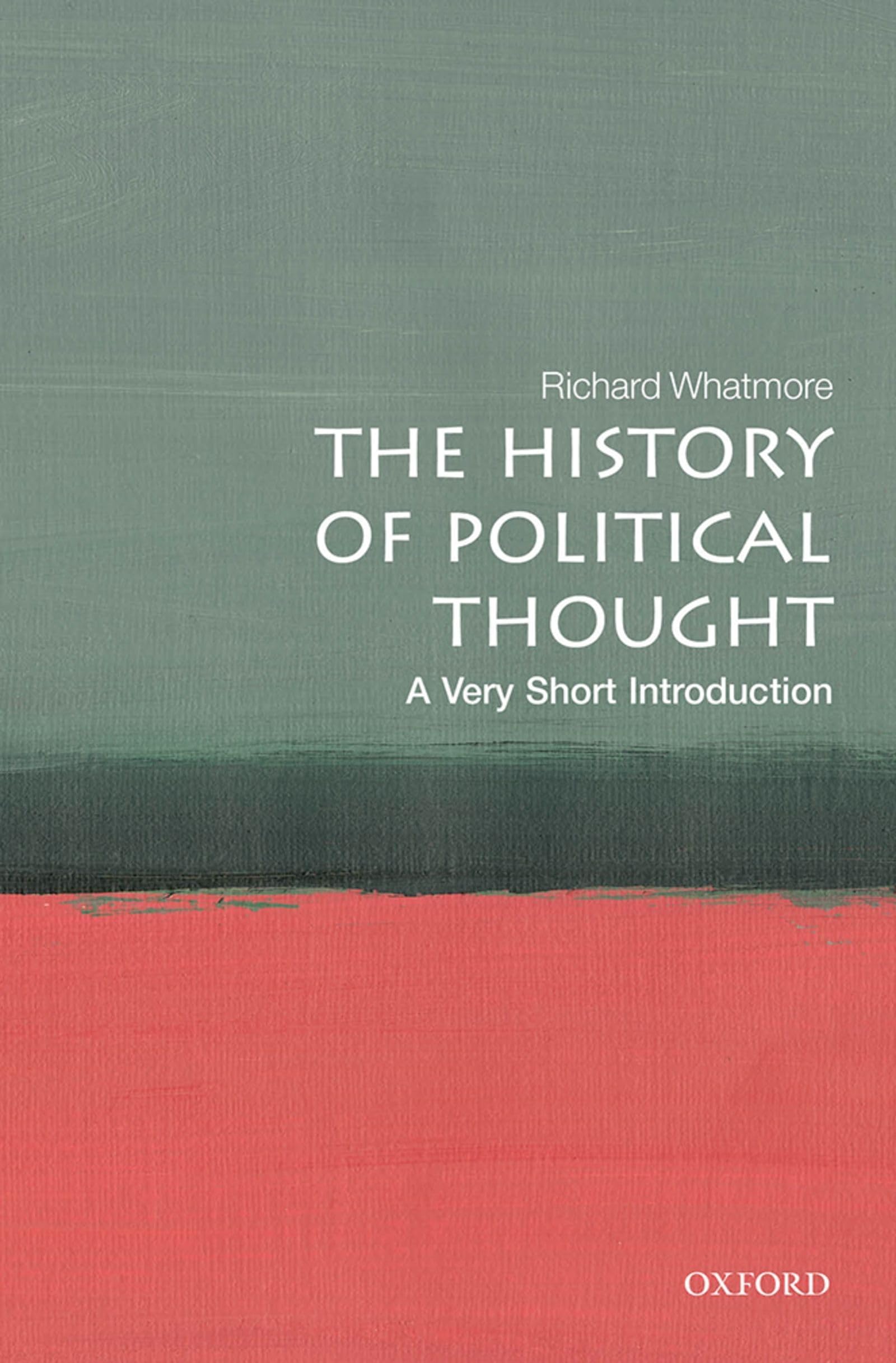
The History of Political Thought: A Very Short Introduction
Product ID: 392633494
Buy anything from 5,000+ international stores. One checkout price. No surprise fees. Join 2M+ shoppers on Desertcart.
Desertcart purchases this item on your behalf and handles shipping, customs, and support to Mongolia.
Thinking about politics has tended to be historical in nature because of the comparisons and contrasts that can be drawn between past and present. Different periods in politics have used the past differently. At times political thought can be said to have been drawn directly from the study of history; at others, perhaps including our own time, the relationship is more indirect. This Very Short Introduction explores the core concerns and questions in the field of the history of political thought. Richard Whatmore considers the history of political thought as a branch of political philosophy/political science, and examines the approaches of core theorists such as Reinhart Koselleck, Strauss, Michel Foucault, and the so-called Cambridge School of Quentin Skinner and John Pocock. Assessing the current relationship between political history, theory and action, Whatmore concludes with an analysis of its relevant for current politics. ABOUT THE SERIES: The Very Short Introductions series from Oxford University Press contains hundreds of titles in almost every subject area. These pocket-sized books are the perfect way to get ahead in a new subject quickly. Our expert authors combine facts, analysis, perspective, new ideas, and enthusiasm to make interesting and challenging topics highly readable. Review: It's very short - but it's not an introduction - This book does not do what it says on the tin. Most potential readers would expect an account of the history of major political thinkers - a chapter on Plato & Aristotle, something on the Middle Ages, and short summaries of key figures like Rousseau, Locke, and Marx, ending up with discussion of political thinkers (e.g. Hannah Arendt) in the 20th Century. What the book actually does is best described as "The history of academic debates about the history of political thought: a very short introduction". So what we get is an account of debates about how the history of political thought is best interpreted, what value there is in studying it, what different methods have been used to analyse it, etc. This explains why the book weirdly doesn't give a page to an all-time great like Aristotle but allocates a whole chapter to the rather obscure historian Reinhart Koselleck. The gap between what the book is and what might be expected is particularly disappointing in relation to what I reckon are the two most important points the book makes. The first is that the history of political thought is not a history of timeless debates about timeless concepts, in which for example, Plato, Rousseau, and John Stuart Mill might argue about "liberty". It doesn't work like that, because "liberty" in the context of the Medieval Church is very different from "liberty" in the context of the campaign for American independence or against the 1945-51 Labour Government's programme of nationalisation. Context is everything, concepts are contested and they change their meanings. But the history of political thought is not always taught that way. The out-of-context approach remains influential and this book rightly criticises it, but would do a much better job if the position it is attacking were to be explained in more detail and not just thrown aside as a defeated past orthodoxy. The second key point in the book is the very Western bias in most histories of political thought. Plato, Aristotle, Rousseau, Locke, and Marx, for example, were all Europeans. Europe has undoubtedly been important in the history of ideas, partly because of the colonisation of the Americas. But this leaves us in a situation where even the supposedly "best educated" in a country such as the UK are ignorant of the thinking of key figures from China, India, the Arab world, and Africa. In the same sort of movement as Postcolonialism in the study of literature, a similar movement is taking place in studying political theory. This book makes that point, but does little to back it up with accounts of non-European thinkers. This could have been an introductory history of political thought that is genuinely global. But it isn't. This book will interest some readers, but I suspect it will only be those who have already read and learned about the history of political thought elsewhere and are ready for something more quirky. Review: A new title, up to date on current media, but all HISTORY - The clue to the contents is the word history. It is written through a historian's perspective. This is not political science, economics or much of philosophy, though moral angles do cover the famous philosophers. Focault is a well covered line of thought here. Foucault had understanding of man through psychology but chose to look at the bigger picture. He even had diplomatic posts. Moving on to page 108, we get China and the philosophy of the East in a few pages. Oxford and Cambridge as centers of academic thinking are also covered. Very few actual politicians are profiled, more of the academics and thinkers interpreters of their times. Leadership and populism, as well as voters, are largely left out.
| Best Sellers Rank | 344,381 in Books ( See Top 100 in Books ) 8,836 in Philosophy (Books) 37,178 in History (Books) |
| Customer Reviews | 4.4 out of 5 stars 21 Reviews |
V**N
It's very short - but it's not an introduction
This book does not do what it says on the tin. Most potential readers would expect an account of the history of major political thinkers - a chapter on Plato & Aristotle, something on the Middle Ages, and short summaries of key figures like Rousseau, Locke, and Marx, ending up with discussion of political thinkers (e.g. Hannah Arendt) in the 20th Century. What the book actually does is best described as "The history of academic debates about the history of political thought: a very short introduction". So what we get is an account of debates about how the history of political thought is best interpreted, what value there is in studying it, what different methods have been used to analyse it, etc. This explains why the book weirdly doesn't give a page to an all-time great like Aristotle but allocates a whole chapter to the rather obscure historian Reinhart Koselleck. The gap between what the book is and what might be expected is particularly disappointing in relation to what I reckon are the two most important points the book makes. The first is that the history of political thought is not a history of timeless debates about timeless concepts, in which for example, Plato, Rousseau, and John Stuart Mill might argue about "liberty". It doesn't work like that, because "liberty" in the context of the Medieval Church is very different from "liberty" in the context of the campaign for American independence or against the 1945-51 Labour Government's programme of nationalisation. Context is everything, concepts are contested and they change their meanings. But the history of political thought is not always taught that way. The out-of-context approach remains influential and this book rightly criticises it, but would do a much better job if the position it is attacking were to be explained in more detail and not just thrown aside as a defeated past orthodoxy. The second key point in the book is the very Western bias in most histories of political thought. Plato, Aristotle, Rousseau, Locke, and Marx, for example, were all Europeans. Europe has undoubtedly been important in the history of ideas, partly because of the colonisation of the Americas. But this leaves us in a situation where even the supposedly "best educated" in a country such as the UK are ignorant of the thinking of key figures from China, India, the Arab world, and Africa. In the same sort of movement as Postcolonialism in the study of literature, a similar movement is taking place in studying political theory. This book makes that point, but does little to back it up with accounts of non-European thinkers. This could have been an introductory history of political thought that is genuinely global. But it isn't. This book will interest some readers, but I suspect it will only be those who have already read and learned about the history of political thought elsewhere and are ready for something more quirky.
T**O
A new title, up to date on current media, but all HISTORY
The clue to the contents is the word history. It is written through a historian's perspective. This is not political science, economics or much of philosophy, though moral angles do cover the famous philosophers. Focault is a well covered line of thought here. Foucault had understanding of man through psychology but chose to look at the bigger picture. He even had diplomatic posts. Moving on to page 108, we get China and the philosophy of the East in a few pages. Oxford and Cambridge as centers of academic thinking are also covered. Very few actual politicians are profiled, more of the academics and thinkers interpreters of their times. Leadership and populism, as well as voters, are largely left out.
Trustpilot
2 months ago
3 weeks ago