

Data Analysis Foundations with Python: Master Python and Data Analysis using NumPy, Pandas, Matplotlib, and Seaborn: A Hands-On Guide with Projects ... From Basics to Real-World Applications)
Product ID: 661059666
Desertcart purchases this item on your behalf and handles shipping, customs, and support to Mongolia.
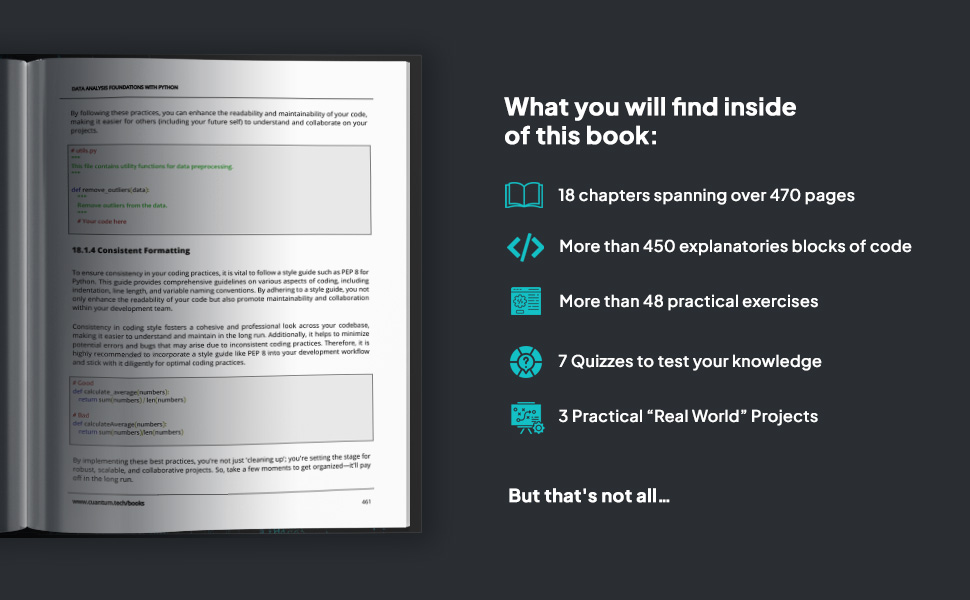
This Book grants Free Access to our e-learning Platform, which includes: ✅ Free Repository Code with all code blocks used in this book ✅ Access to Free Chapters of all our library of programming published books ✅ Free premium customer support ✅ Much more... Unlock the Full Potential of Data Analysis with Python—All in One Comprehensive Guide! Are you an aspiring data scientist or analyst with a passion for exploring the vast possibilities of Python-based data analysis? If so, you're in luck because "Data Analysis Foundations with Python" is the perfect guide for you. This comprehensive and immersive book will not only provide you with a hands-on approach but also offer a detailed exploration of the fascinating world of Python-based data analysis. Whether you're a beginner or an experienced professional, this book will take you on a journey that will deepen your understanding and expand your skills in the field. From Basics to Mastery: A Structured Learning Journey This book is not just a mere compilation of Python codes and data sets. It goes beyond that, offering a comprehensive course that will guide you from being a Python beginner to becoming a highly skilled Data Analyst. Throughout this book, you will not only acquire essential Python skills, but also gain practical experience in data manipulation techniques and learn about the latest advancements in machine learning. With its well-structured content and engaging learning activities, this book ensures that your journey towards becoming a proficient Data Analyst is both seamless and enjoyable. Three Exceptional Projects and Two In-Depth Case Studies Project 1: Analyzing Customer Reviews : Learn how to extract, clean, and make sense of textual data from online customer reviews. Project 2: Predicting House Prices : Delve into the fascinating world of supervised learning, where you'll get to apply complex machine learning models to predict property prices. Project 3: Building a Recommender System : Uncover the secrets of unsupervised learning as you build and deploy a fully functioning recommender system. Case Studies for Real-world Insight Case Study 1: Sales Data Analysis : Unearth the power of Python to transform raw sales data into actionable insights. Case Study 2: Social Media Sentiment Analysis : Venture into the realm of Natural Language Processing and learn how to analyze public sentiment from social media data. Additional Features Practical Exercises : Each chapter concludes with practical exercises, designed to test your understanding and apply what you’ve learned in real-world scenarios. Best Practices and Tips : The final section of the book is devoted to best practices in the field, including code organization and how to continue learning and growing in your data analysis journey. Who This Book Is For Whether you're a student who is eager to expand your knowledge, a professional who is seeking to embark on a new career path, or an experienced analyst who is looking to enhance your skills and stay ahead in the industry—this comprehensive book is specifically tailored to meet your needs and provide valuable insights and guidance. What Are You Waiting For? Embark on a transformative journey to unlock Python's potential for data analysis. Gain a deep understanding of Python's capabilities and learn how to extract insights from complex datasets using libraries and tools. Develop skills through real-world case studies and hands-on exercises to confidently tackle analytical challenges.




| Asin | B0DFQ98GGY |
| Book 3 Of 3 | Ultimate Python Mastery Bundle: From Basics to Real-World Applications |
| Dimensions | 7.5 x 1.07 x 9.25 inches |
| Isbn 13 | 979-8894969169 |
| Item Weight | 2.21 pounds |
| Language | English |
| Print Length | 472 pages |
| Publication Date | August 29, 2024 |
| Publisher | Staten House |
Trustpilot
1 month ago
1 month ago